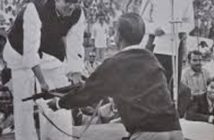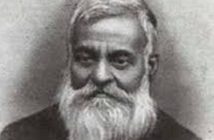

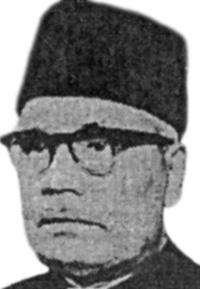
Abdul Monem Khan was a Bengali politician, lawyer and governor of East Pakistan. He served from 28 October 1962 to 23 March 1969. His tenure in the governors of East Pakistan is the longest. He was a close aide of Ayub Khan. During the rule, he was blamed for the treatment of nationalists. During the war of liberation during Pakistan’s war of liberation, he died in the hands of Bangabandhu Sheikh Mujibur Rahman during the war in Pakistan.
Abdul Munem Khan was born on June 28, 188, in the village Humayunpur of Bajitpur upazila of Kishoreganj district on June 28th. His father’s name was Maulvi Kamar Ali Khan and mother’s name was Nasima Khatun
He passed matriculation examination from Mymensingh Zilla School in 1916. Then he passed BA examination from Dhaka College in 1920. In 1922, he received the BL degree from Calcutta University. In 1924, he returned from Dhaka University to B.L. Get the degree.
AbdulMunem Khan joined the Mymensingh District Bar as a lawyer in 1927. During the floods in North Bengal in 1930, he distributed distribution with Subhash Chandra Bose. He was elected Assistant Secretary of Anjuman-i-Islamia of Mymensingh in 1932. He is also a sports organizer. He was a member of Mymensingh Mohammedan Sporting Club. From 1946 to 1954, he served as Chairman of Mymensingh Zilla School Board. In 1948 he was elected a member of the primary education board of East Bengal.
He joined the All India Muslim League in 1935. He was the founding secretary of the Muslim League of Mymensingh district. In 1936, Muhammad Ali Jinnah visited Mymensingh on his invitation. Jinnah gave a number of public meetings in this tour. In 1947, he was again elected the secretary of the district Muslim League and remained in office until 1955.
In 1945 he became a member of Mymensingh District Board. In the next few years, he was made the municipality ward commissioner as he did many social activities. In 1946, he organized the National Guard of Mymensingh district. He was appointed the organization’s Salar-e-district.
In 1947, he became a member of the East Pakistan Muslim League Working Committee. In the same year all Pakistan Muslim League councilors were elected. In 1948, he became a member of the Pakistan Constituent Assembly. In 1950, he became a member of the Bengal Defense Committee and the Provincial Armed Services Board. In the provincial elections of 1954, he lost many votes.
In 1962 he was elected a member of the Pakistan National Assembly. In that year Ayub Khan appointed him the central health, labor and social welfare minister. A few months later, he was appointed governor of East Pakistan. He was in this position from 1962 to 28 October 1969 on 23 March. During his regime, special progress was made in East Pakistan education, health, communications, business, agriculture and industry. He played a significant role in the cyclone in 1963 and after cyclone in 1965. During his tenure, University of Chittagong, Institute of Post-Graduate Medicine and Research (now Bangabandhu Sheikh Mujib Medical University) and several medical colleges were established. He established the role of Jangarikanagar University. In 1967, he converted into the Rajbari Uttara Governor House of Dighapatiya.
He was a sincere supporter of Ayub Khan. He worked for the fundamental democracy initiated by Ayub Khan and in the election of 1965, he helped Ayub Khan in a contest with the ruling AIUB alliance (Capt) Fatema Jinnah. During his time, massive student protests were created. He said that the movement of education, six-point and eleven-point demand are among those who are opposed. As a result, bad reaction was made to him.
During the war of liberation, he was biased towards Pakistan. On October 13, 1971 the freedom fighters attacked their Banani house. At that time he was shot. He died after taking the injured to Dhaka Medical College Hospital.