
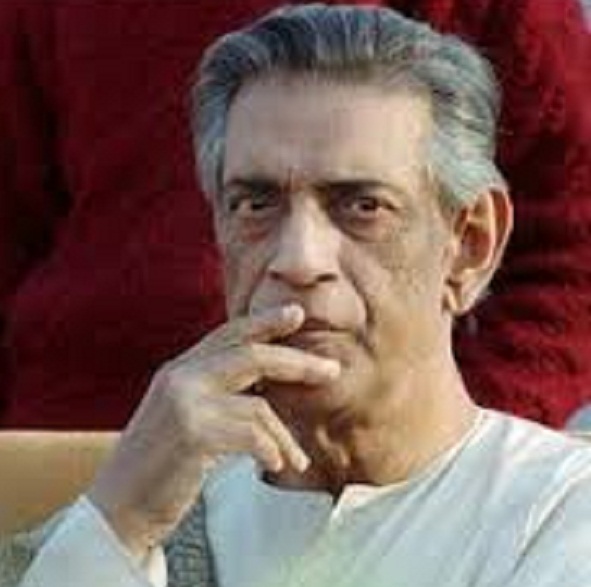
Satyajit Ray is an Indian filmmaker and one of the greatest film directors of the twentieth century. He was born in a Bengali family renowned in the city of Kolkata, literature and industry. His ancestor was born in the Kashiadi upazila of Kishoreganj district, Barisal; he studied Visvabharati University at Presidency College, Calcutta and established Rabindranath Tagore in Santiniketan. Although Ray’s career started as a commercial painter, he first met with French filmmaker Jean Renair in Calcutta and later on to visit the London city, after seeing Italian Nawab’s prophetic film Ladri di Bichikleta, he was inspired to make films.
As a filmmaker, Satyajit was versatile and his work was huge. He made 37 full-length story, documentary and short films. Her first film, Parer Patil received 11 international awards, among which was the “Best Human Document” award (Best Human Documentary), which was awarded in the Cannes Film Festival. Pathar Panchali, Aparajit and Apur Sansar – together with these three films, Apu Trilogy, and this film-trance is widely recognized as the best work of his life or Magnum Opus. Through the film, Ray did a number of works including script writing, screening, music dancing, taking pictures, art direction, editing, artist-name list and brochure design. He was a solo fiction writer, publisher, painter, graphic designer and film critic, without the film production. He has received many awards in the colorful career, but the most famous of these is the Academy Award winning award in 1992 (Osaka), which he earned as a full-fledged career.
It is possible to get the genesis of Satyajit Ray almost ten generations. His original ancestral hamlet is located at Massoya village under Katiadi upazila of Kishoreganj district of present-day Bangladesh. At present, their ancestral home is still there, where both the sons of Satyajit were born to Upendra Kishore Roy Choudhury and Baba Sukumar Roy. In 1947, before the partition of India, Upendrakisho’s family moved to Calcutta. Currently, about 4 acres of this huge land and house are under the revenue department of Bangladesh government and they are planning to build a tourist center centered around this house. Besides, the ancestor of Satyajit Ray, Hari Kishore Roy Chowdhury, organized a fair about 200 years ago on the occasion of Sri Sri Kalvavirab Pooja in Masruya village. The fair is celebrated every year on the last Wednesday of Baishakh every year.
At the time of Upendra Kishore, the history of Satyajit’s family took a new turn. Originally authored by authors, painters, philosophers, publishers and hobby astronomer Upendrakishore, a religious and social movement of the 19th century Bengal was one of the leaders of the Brahmo Samaj. Sukumar Rai, the son of Upendrakishore, was one of the best writers of Bangla literature of nonsense and child literature. Sukumar was famous as a skilled painter and critic. Satyajit Ray, the only child of Sukumar, was born in Calcutta in 1921. Sukumar died at the age of only three years of Satyajit; Mother goddess Sapva Goddess him with great difficulty. Satyajit went on to study economics at Presidency College, Kolkata, although his weaknesses were always to the arts. In 1940, Satyajit’s mother kept insisting on getting admitted to Visvabharati University, founded by Rabindranath Tagore at Santiniketan. CalcuttaPrimey Satyajit did not think too much about Santiniketan’s education environment, but at the end of the mother’s persuasion and accepting respect for Rabitakur. At Santiniketan, Satyajit was able to realize the importance of the art of the East. He later admitted that he learned a lot from famous artists Nandlal Basu and Binod Bihari Mukhopadhyay. Later on, Satyajit made a documentary on Binodbihari, a documentary film. After traveling in Ajanta, Ellora and Elephanta, Ray’s deep reverence and affection over Indian art flourished.
According to the rules, Satyajit was going to study for five years in Visva-Bharatiya, before he left Santiniketan in Calcutta in 1943 and joined British advertising firm DJ Kimmer as a “junior visualizer” in exchange for only 80 rupees. Pictorial or visual design was a subject of his choice and he was well respected in the organization, but there was tension between the English and Indian employees (the English employees were paid more), and Satyajit believed that the company was “basically stupid.” On the side of Satyajit DK Gupta’s publishing company ‘Signet Press’ Dr. DK Gupta requested to cover the printed books of the signet press, and gave him complete artistic independence, where Ray designed a lot of cover books, including Jim Corbett’s Maneaters of Kumaun and Jawaharlal Nehru’s Discovery of India. Written by Bibhutibhushan Bandyopadhyay is one of the well-known Bangla novel Pathar Panchali The children’s version also works on Amber’s Bempun, written by Bibhavibhushan, the novel influenced Satyajit very well, and subsequently Satyajit selected it as the subject of his first film, apart from drawing the cover of the book, he also drew the pictures in it. These pictures are then found in the movie as a scene or shot.
In 1947 Satyajit established the Calcutta Film Society with Chidanand Dasgupta and others. Being a member of the society, he had the opportunity to watch many foreign films. At that time he looked at a lot of pictures with a deep focus. During World War II, he established friendship with American soldiers in Calcutta; He took news from them about the new American films coming to the city. At the time, he came in contact with a Royal Air Force officer named Norman Claire, who liked movies, chess, and classical music of the West, just like Ray. In 1949 Satyajit married his longtime sister and longtime girlfriend Bijoya Das. The son of Sandeep Rai was born in the house of Satyajit, who himself is now a famous film director. In the same year, Jean Renoar came to Calcutta to shoot his The River film. Satyajit helps Renoir find a graphic in rural areas. At that time, Ray talked about Ranovar’s filming of “Pather Panchali” and Renoir encouraged him to move forward.
Satyajit decides that the classical “Bildusignraman” of Bangla literature will be Pathar Panchali-the theme of his first film. In this almost-autobiographical novel written by Bibhutibhushan Bandyopadhyay published in 1928, the story of the rise of Apu, a village boy from Bengal, has been described.
Satyajit combined some previously-unexpected craftsmanship to create this picture, though his cameraman Subrata Mitra and art director Bansi Chandra Gupta both later became famous in their respective fields. Besides, most of the actors were fond of the film. At the end of 1952, Ray began spending his own savings on his own savings. He thought that after watching the initial scenes, someone would probably make money in the film. But that kind of financial support was not met. The scenes of Pather Panchali have been abruptly stopped for almost three years. Only then could the scene be possible when Satyajit or construction manager Anil Chaudhary could have provided the necessary money. In the end, the film was completed in 1955 with a loan from West Bengal government and it was released in that year. Soon after the release, the audience received critical acclaim and won many awards. The film has been shown in India and abroad for a long time. While making the film, no request was made to replace the screenplay in exchange for money. He even ignored the request of the West Bengal government for a happy ending (where the story of the film adds a “development project” to the Apur Sansi). Satyajit decides that the classical “Bildusignraman” of Bangla literature will be Pathar Panchali-the theme of his first film. In this almost-autobiographical novel written by Bibhutibhushan Bandyopadhyay published in 1928, the story of the rise of Apu, a village boy from Bengal, has been described.
Satyajit combined some previously-unexpected craftsmanship to create this picture, though his cameraman Subrata Mitra and art director Bansi Chandra Gupta both later became famous in their respective fields. Besides, most of the actors were fond of the film. At the end of 1952, Ray began spending his own savings on his own savings. He thought that after watching the initial scenes, someone would probably make money in the film. But that kind of financial support was not met. The scenes of Pather Panchali have been abruptly stopped for almost three years. Only then could the scene be possible when Satyajit or construction manager Anil Chaudhary could have provided the necessary money. In the end, the film was completed in 1955 with a loan from West Bengal government and it was released in that year. Soon after the release, the audience received critical acclaim and won many awards. The film has been shown in India and abroad for a long time. While making the film, no request was made to replace the screenplay in exchange for money. He even ignored the request of the West Bengal government for a happy ending (where the story of the film adds a “development project” to the Apur Sansi).
One of the main and repetitive elements of Ray’s film was its humanism. His pictures are seemingly simple, but the complexities are hidden in the simplicity of this simplicity. His film’s style and characterization has been praised many times. Many have praised his work, and one of them is Akira Kurosawa’s statement: “I do not see the film of Satyajit, and the moon and sun are not the same on the earth.” On the other hand, the critics of Satyajit think that his films are very slow, so that “the royal snails “Like they are, they think of Satyajit’s humanism as a manifestation of simplicity, and his work seems to be anti-modern. They also say that there is no new expression or experimentation like his contemporaries (such as Jean-Luc Gader) in Ray’s film, Stanley Kaufman has written that some critics of Ray’s opinion believe that “the films that have been preserved in the past have only captured their characters , But does not impose a dramatic array of characters in the lives of characters, but those characters Ra viewers will love. Ray himself said nothing to him about the slow pace of his films, and on behalf of Kurosawa, Ray said: “Ray is not slow at all the pictures. Rather, they can be compared to a large river that is calmly flowing. ”
Critics have often compared Satyajit to famous personalities of film and other media, such as Anton Chekhov, Jean Renoir, Basroreo de Sica, Howard Hox or Volfgang Amadeus Mozart. He has also been compared with Shakespeare. VS Naipal compares the scene of Shatrunj Ke Khiladi to Shakespeare’s play, saying: “Only three hundred words are spoken but terrific things happen.” Those who are not satisfied with the aesthetic of Ray’s film also acknowledge He was one of the first to highlight the entire culture of his film with various subtle films. The Indip This feeling is expressed in the writings of Satyajit in the ender journal: “Who else can compete?” According to the general, the images made after his heart attack were not as live as his old pictures.
Satyajit Ray is a cultural icon to the Bengali community in India and around the world. After his death, the life of Calcutta stopped. Thousands of people came to his house to pay homage. Satyajit had a profound influence in Bangla film world. Ray’s film strategy inspired Aparna Sen, Rituparno Ghosh, Gautam Ghosh and Tarek Masud and Tanvir Mokammel of Bangladesh. Filmmakers like Buddha Dasgupta, Mrinal Sen, and Adoor Gopalakrishnan acknowledge the contribution of Satyajit to Indian films. Outside India, filmmakers such as Martin Scorsese, James Ivory, Abbas Kiarostami and Eliya Kazan are believed to have been influenced by his work. Forty Shades of Blue was created in 2005 by Era Sax, a poorly recreated remake of Charulata, and the last scene of the 1995 film My Family was followed by the last scene of Apur Sansar. Some pictures of the recent times, such as the Sacred Avil, Deepa Mehta Elements Trio, and even Jean-Luc Godard’s films are found to be directed to Satyajit film.
Apu Nahasapimapetilon, the character of the American animated television series The Simpsons, is named after the tribute to Ray. With the help of Madhavi Mukherjee, the picture of Satyajit went to the stamp of Dominica – which is the first such event for an Indian film personality. Satyajit or his work has been instructed in many literary works. In Salman Rushdie’s Haroon and the Sea of Stories, two fish names were named as Guppy and Bagha (in the name of the two characters of “Gopi Gain” and “Bagha Bain” by Ray’s Ray). Many organizations provide honorary doctorate degrees to Satyajit. Among them, Oxford University was awarded the degree as the only second filmmaker (after Chaplin). In 1987, the President of France awarded him the Lezion Donor. Shortly before his death, the Indian government gave him Bharat Ratna, India’s highest civilian award. In 1993, the University of California, Santa Cruz founded Satyajit Ray Film and Study Collection. In 1995, the Indian government established the Satyajit Ray Film and Television Institute for research on film.