

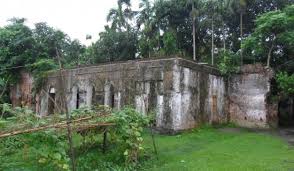
Isa Khan Jongolbari (c 1529 – September 1599) was the head of a Muslim Rajput, who had zamindari zamindari zamindari of zamindari and led the zamindars of Bhati region towards 16th century. During his reign, he opposed the invasion of the Mughal empire. After his death, under the Mughal rule.
Isa Khan’s grandfather Bhagirath, the Kshatriya Rajput community. He came from Ayodhya in Bengal and took the service of the Diwan under the sultan of Bengal. He was Ghiyasuddin Mahmud Shah (153-1538 AD) After his death, his son, Kalidas Ghazdani, inherited this title. Later, Kalidas converted to Islam and the Muslim took the name Sulaiman Khan. Sulaiman was married to Sulaiman’s daughter Syeda Momena Khatun and got zamindari in Sarail (now Surrey Upazila, Brahmanbaria, Bangladesh) in the Bhati region. Their son Isa Khan was born in Sir.
After the death of Sultan Ghiyasuddin, Sulaiman himself declared himself a legitimate heir and revolted against the newly established Afghan rule. Later he was killed in war.
Isha Khan’s father was born in Raj Rajput group, he revolted and Islam was killed in a war against Shah Suri. After the death of Shah Suri, Taj Khan came to Bengal. Ez Khan’s uncle, Kutubuddin, strengthened his position under Taj Khan. Kutubuddin then brought two brothers from the Tuaran region. Isa Khan firmly assimilated his position under the Karrani rulers.
The emergence of power
Bar Sardar Bari, Bidi of Jessore Khan’s landlord of Sonargaon
In 1564-1566, with the help of a coroner ruler Taj Khan in 1535 AD, he received an estate as a ruler of the Karrani dynasty of Bengal in Sonargaon and Maheshwari paragana area. He gradually increased his power. In 1573, he helped Daud Khan Karranani against King Uday Manikya of Tripura in 1573. In 1575, he helped Deputy General Daud Khan to expel the Mughal Navy from Sonargaon. Serving Jessore as Jessore, he called Khijirpur as Masnad-i-Ala.
Military operation
In 1576, the rule of the Karrani dynasty was defeated by the defeat of Daud Khan in the battle of Rajmahal. In the local rivalry, Jesus played a leading role in the beginning. In the end, he successfully won in different parts of Dhaka, Rangpur, Pabna, Tripura, Mymensingh and Bogra districts. In 1577 AD, a kingdom was established in 1577-82 AD as the ruler of the Bhati region, it was established as a political and trade center of Arasinandundur (present day present day Pakundia). District, Kishoreganj). From Sorail, he shifted his administrative center to Sonargaon, he built Kotbab, Kalagaiha fort and Khojirpur of Sonargaon.
The war against Khan Jahan
In 1578, the Mughal subahdar of Bengal Subhasar Khan conducted an operation in the Bhati region and established the camp of Bhawal. Ibrahim Naral, Karimadad and Shah Bardi acknowledged their allegiance to the Mughal force. Shah Bardi and Mohammad Kuli were led by the Mughal forces on the banks of the Meghna river on the Sarail-Juan Shahi border of Kastul. According to Rajmala, Jesus came back quickly in Tripura and demanded help from Tippera Raja, because of the blessings of Rani Amarbara in Amar Maneka, King gave 52,000 soldiers to face the Mughals.
But before the return of Jesus, two zamindars – majlis and majlis dealer already defeated the Mughal forces under Hamza and Khazan. Although Muhammad Quli was a prisoner, Shahbari fled to Bhawal camp. Khan Jahan Tandar with the rest of the soldiers went to Shreehattpur town. A few months later, on January 15, 1978, Khan Jahan died due to health problems.